Livres
Référence : LIT385MAcadémie Française
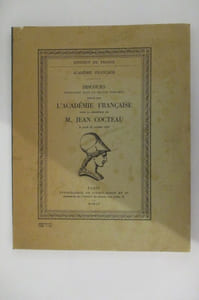
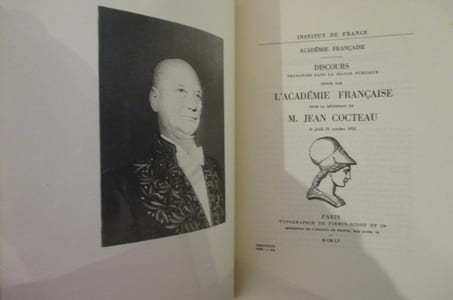
DISCOURS PRONONCES DANS LA SEANCE PUBLIQUE TENUE PAR L'ACADEMIE FRANCAISE POUR LA RECEPTION DE M. JEAN COCTEAU. Le Jeudi 20 Octobre 1955.1955 / 48 pages. Broché. Editions : Typographie de Firmin-Didot et Cie.
Couverture présentant de très légères rousseurs, une micro déchirure sur le coin supérieur gauche du premier plat (peu signifiante). Intérieur très frais avec seulement 2 "points" de rousseurs. Des pages non coupées. Très bel état. RARISSIME et PETIT PRIX.
Bayonne, France
45,00 €
Livres
Référence : 86643[Album de la Pléiade] - [COCTEAU (Jean)].-
Album de la Pléiade n°45 : COCTEAU. Biographie illustrée par Pierre Bergé.2006 Paris, NRF, Gallimard (Album de la Pléiade n°45), 2006, in 12 relié plein cuir marron de l'éditeur, jaquette rhodoïd, étui illustré, 376 pages ; 305 illustrations.
Fermeture du 1er au 23 Août
Saint-Etienne, France
35,00 €
Livres
Référence : 014281André Breton - Camille Bryen - Jean Cocteau - Jean Van Heeckeren - Jacques-Henry Lévesque - Michel Perrin -t Michel Seuphor
Francis Picabia. 15 Toiles Récentes de Francis Picabia 1952. 7 fac-similés de lettres de André Breton, Camille Bryen, Jean Cocteau, Jean Van Heeckeren, Jacques-Henry Lévesque, Michel Perrin, Michel SeuphorParis Galerie Colette Allendy 1952 plaquette in-8 Agrafé
Edition originale de cette plaquette publiée pour l'exposition de Picabia organisée du 19 Décembre 1952 au 15 Janvier 1953. 7 fac-similés de lettres de André Breton, Camille Bryen, Jean Cocteau, Jean Van Heeckeren, Jacques-Henry Lévesque, Michel Perrin et Michel Seuphor à leur ami peintre. >>> JOINT l'article de Pierre Cabanne "Cinquante ans de plaisir avec Picabia l'insaisissable" (6ff., reproductions). Très bon 0
Paris, France
45,00 €
Livres
Référence : ABE-1760659428829ANDRE LANG
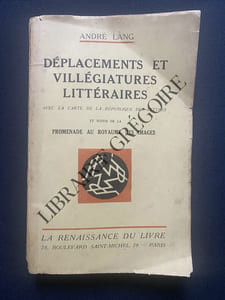
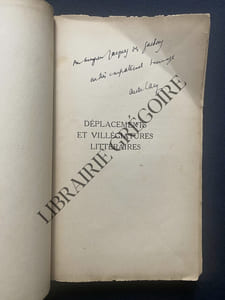
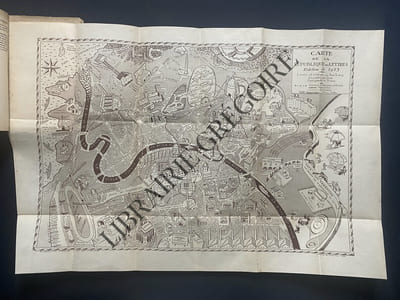
DEPLACEMENTS ET VILLEGIATURES LITTERAIRESAVEC LA CARTE DE LA REPUBLIQUE DES LETTRES ET SUIVIS DE LA PROMENADE AU ROYAUME DES IMAGES-236 PAGES-12 CM X 19 CM-EXEMPLAIRE SERVICE DE PRESSE-ENVOI DE L'AUTEUR AU ROMANCIER ET CRITIQUE LITTERAIRE JACQUES DES GACHONS-PRIERE D'INSERER-EN GRANDE PARTIE NON COUPE-MANQUE EN COIFFE DE PIED-(JDG16)
LA RENAISSANCE DU LIVRE COUVERTURE SOUPLE ETAT BON
50,00 €
Livres
Référence : 63164André Siegfried. Jean Cocteau. Alexandre Arnoux. Jean Schlumberger. Bertrand de Jouvenel. Paul Claudel. Odon de Horvath. Roland de Marès. Général de M
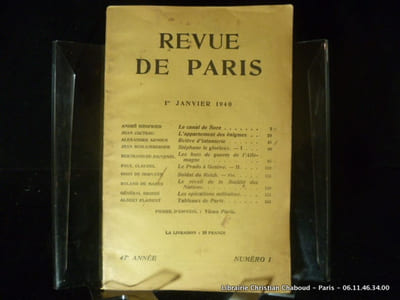
La Revue de Paris Numéro 1 - 47e année - 1er janvier 1940.Paris, in-8, broché, 177 pages. Rares annotations au crayon. Bon état.
Bruxelles, Belgique
15,00 €
Livres
Référence : 11036[ANONYME]. [CURIOSA]. [COCTEAU Jean].
LE LIVRE BLANC.Sans lieu [Paris]. Paul Morihien, éditeur. Sans date [1949]. In-4° broché. Couverture rempliée. 5 compositions de Jean Cocteau, gravées sur bois et tirées en bleu (trois à pleine page, une dans le texte, une en couverture). Le monogramme de Paul Morihien est également de la main de Jean Cocteau. 86 pages. Troisième édition (E.O. parue en 1928 chez Maurice Sachs et Jacques Bonjean - tirage à 31 exemplaires. Deuxième édition en 1930 aux fictives Editions du Signe, avec 18 dessins de Jean Cocteau - tirage à 450 exemplaires). Tirage à 500 exemplaires. 1/475 sur vélin Johannot. [25 vélin de Rives avec suite sur japon / 475 vélin Johannot]. Pages non coupées. Très bel exemplaire.
Secrétaire particulier de Jean Cocteau, Paul Morihien, né en 1917, fit paraître sous le manteau en 1943, avec la collaboration de Robert Denoël, "Notre-Dame des Fleurs" de Jean Genet. Cest en 1946 que, avec laide financière de Jean Cocteau, il créa officiellement sa maison dédition. Il devint, durant les sept années dexistence des Editions Paul Morihien, léditeur principal de Jean Cocteau : "La Crucifixion" (1946), "La Difficulté dêtre" (1947) et "Théâtre de poche" (1949). Il publia et diffusa dans sa librairie-galerie, rue de Beaujolais, sous les arcades du Palais-Royal, près de vingt-cinq ouvrages de grande qualité et de grande beauté formelle, parmi lesquels "Carnets de Don Juan" (1947) de Marcel Jouhandeau, "Réflexions sur la question juive" (1946) de Jean-Paul Sartre, "Querelle de Brest" (1947) et "LEnfant criminel" (1949) de Jean Genet, "Les Barricades mystérieuses" (1946) dOlivier Larronde, "Espace américain" (1948) de Roger Caillois, etc... (Source : I.M.E.C.) /// De façon plus inattendue, on retrouve Paul Morihien parmi le cercle damis férus de natation qui créèrent des clubs de vacances doù naquirent les fameux « Club Méditerranée ». Paul Morihien sera quelque temps en charge de lédition du "Trident", bulletin de liaison du « Club Méditerranée ».
Lyon, France
450,00 €
Livres
Référence : 9081[APOLLINAIRE Guillaume].
Numéro spécial de la revue EUROPE entièrement consacré à Guillaume Apollinaire. Inédits de Guillaume Apollinaire.N° 451-542, novembre-décembre 1966. In-8° broché. Couverture illustrée d'un dessin de Max Jacob. 16 planches de photographies, dessins et documents. 423 pages. // Articles de Jean Cocteau, P.-M. Adéma, Pierre Albert-Birot, Picasso, Franz Hellens, Michel Décaudin, Jean Picart Le Doux, Hubert Juin, Louis Aragon
Bon état.
Lyon, France
14,00 €
Livres
Référence : 8533[APOLLINAIRE Guillaume]. LE FLÂNEUR DES DEUX RIVES. " Bulletin d'études apollinariennes ".
LE FLÂNEUR DES DEUX RIVES. " Bulletin d'études apollinariennes ". Paris (20, rue Dauphine). Directeur : Pierre-Marcel Adéma. Secrétaire de rédaction : Michel Décaudin. In-8° agrafé. Couverture brique. 8 numéros (dont un double) ont paru en 7 livraisons, de mars 1954 à septembre-décembre 1955. (Destribats, 585) (Vasseur, 45)COLLECTION COMPLÈTE EN TRÈS BON ETAT.Textes inédits ou rares d'Apollinaire. Textes et articles d'André Breton, Paul Léautaud, Max Jacob, Jean Cocteau, Pierre Mac Orlan, Pierre Albert-Birot, Louis de Gonzague Frick, André Salmon, Léopold Survage, André Derain, Pierre-Marcel Adéma, Michel Décaudin, Ralph Messac, Philippe Chabaneix
Collection complète du n° 1 au n° 8. Très propre.
Lyon, France
170,00 €
Livres
Référence : 60103"APOLLINAIRE, GUILLAUME - PICASSO (ILLUSTR.) - JEAN COCTEAU - LÉON BAKST - SERGE DIAGHILEV.
BALLETS RUSSES. PROGRAMME. PARIS 1917. Les Ballets Russes a Paris. Représentations Exceptionelles avec le gracieux Concours des Artistes de M. Serge de Diaghilew. - Programme des Ballets Russes. Les Ballets Russes à Paris. Saison - Mai 1917. [Guillau... - [HAND-PAINTED BY PICASSO - COINING ""SURREALISM""]Paris, Mai 1917. Folio. Original illustrated extra wrappers (with a picture by Picasso on the front and the décor for ""Baba Iaga"" on the back)"" original illustrated wrappers for ""Théatre du Chatelet"" (drawing by André Marty on front, and advertisements on back) in grey and red"" original illustrated coloured wrappers for ""Programme des Ballets Russes"" (front wrapper illustrated by Picasso with the Chinaman-costume from ""Parade""). A bit of soiling to the extra-wrappers and small professional restorations to upper front cover and top of spine (this barely noticeable) as well as to blank margin of back wrapper. Apart from that, an excellent and very well perserved copy with only slight browning to some leaves. Apart from the described wrappers and extra-wrappers, there are, in all, 24 leaves with -mostly photographic- illustrations (four of them with original hand-colouring on top) and 6 leaves of text.With the original errata-leaf laid in loose, stating also that the illustrations ""Femmes de bonne humeaur"" and ""Parade"" have been hand-painted by Carlos Socrate, after the designs of Bakst and Picasso, and that the front wrapper for ""Parade"" (the Chinaman) has been handpainted by Picasso himself.
Scarce original printing of this seminal avantgarde-publication, the May 1917 ""Théatre du Chatelet""- publication that presents Diaghilev's ""Ballets Russes"" in Paris - here containing the entire separate publication mainly devoted to Jean Cocteau's groundbreaking ballet ""Parade"" - being one of the most important publications in the history of modern art. It is here, in his presentation-article to ""Parade"" that Apollinaire coins the term ""surrealism"" and thus lays the foundation for the seminal cultural movement that Bréton came to lead. Furthermore, the ballet ""Parade"" represents a historical collaboration between several of the leading artistic minds of the early twentieth century: Erik Satie, Jean Cocteau, Pablo Picasso, Léonide Massine, and Serge Diaghilev, and is famous, not only for its contents and its music, but also for its magnificent costumes designed by Picasso, the drawings of which are presented in the present publication for the first time - most famously the front cover for the ""Parade""-programme, which depicts the ""Costume de Chinois du ballet ""PARADE""/ Aquarelle de Picasso"", an etching with original, stunning pochoir-colouring (hand-painted by Picasso himself!).It is the 1917 ballet ""Parade"" - the first of the modern ballets - originally presented for the first time in the present publication, that marks Picasso's entry into the public and bourgeois institutions of ballet and theatre and presents Cubism on the stage for the first time. The present publication constitutes an outright revolution in the history of art, theatre, and ballet.Several variants of this spectacular publication exist, but the one we have here is as original and complete as it comes, containing the entire contents of the different variants. We not only have the extremely scarce and fragile dust-wrapper and the equally scarce illustrated coloured double-wrappers (front: ""Peinture de Picasso"""" back: Décor de Larionow pour le ballet ""BABA IAGA""""), but also the entire 1917 ""Théatre du Chatelet""-programme (in original illustrated wrappers) with the entire separate ""parade""-issue -also entitled ""Programme des Ballets Russes""- (also in original illustrated wrappers), with more than 20 leaves of photographic illustrations containing pictures of the actors and actresses, also in their spectacular avant-garde-costumes, Bakst's portrait of Leonide Massine, Picasso's portrait of Stavinski, Bakst's portrait of Picasso, Picasso and Massine in the ruins of Pompei, Picasso's drawings of a scene from ""Parade"" and of Massine, as well as several (mostly humorous) advertisements. But more importantly, we have, apart from the above-mentioned famous Chinaman by Picasso, in original pochoir-colouring, the other famous etching by Picasso ""Costume d'acrobate du ballet ""Parade""/ Aquarelle de Picasso"", also in original pochoir-colouring (bright blue), the seminal presentation-article by Apollinaire, which coins the term ""surrealism"" (see bottom of description for full translation of this groundbreaking preface), the two ""Les Femmes de Bonne Humeur""-figures by Bakst, Constanza and Battista, printed and heightened in gold (pochoir), the printed costume by Larionow, ""Les contes russes"", which is with original bright red and blue pochoir-colouring, and the ""Le Mendiant""-costume by Bakst for ""Parade"", and, of course, the texts by Bakst (on choreography and décor), Georges-Michel (Ballets Russes after the War), as well as the texts for the various ballets (listing the actors and their rôles as well as a resume of the plot). "" ""Tact in audacity consists in knowing how far we may go too far."" Jean Cocteau, poet, writer, and arts advocate, made this statement in his 1918 manifesto, The Cock and Harlequin. Cocteau, in collaboration with Erik Satie and Pablo Picasso, discovered ""how far"" to ""go too far"" in the circus-like ballet Parade-one of the most revolutionary works of the twentieth century. Parade incorporates elements of popular entertainment and uses extra-musical sounds, such as the typewriter, lottery wheel, and pistol, combining them with the art of ballet. Cocteau wrote the scenario for the one-act ballet and contracted the other artists. Satie wrote the score to the ballet, first in a piano four-hands version and then in full orchestration, while Picasso designed the curtain, set, and costumes. Later, Léonide Massine, a dancer with the Ballet Russes, was brought in as the choreographer. Serge Diaghilev's Ballet Russes premiered the ballet Parade on May 18, 1917. The program notes for the ballet were written by the poet Apollinaire. They became a manifesto of l'esprit nouveau or ""the new spirit"" which was taking hold in Paris during the early twentieth-century. Apollinaire described the ballet Parade as ""surrealistic,"" and in doing so created a term which would develop into an important artistic school."" (Tracy A. Doyle, Erik Satie's ballet PARADE, p. 1).When the French poet and army officer Guillaume Apollinaire wrote the program notes For ""Parade"", he created the manifesto of the ""l'esprit nouveau"" - ""the new spirit"". Cocteau had called the ballet ""realistic"", but Apollinaire took it an important step further and described it as ""surrealistic"", thus coining a term that would soon develop into an important artistic movement. With Picasso, Apollinaire had established the aesthetic principals of Cubism and was considered a leader in the European avant-garde. ENGLISH TRANSLATION OF APOLLINAIRE'S PROGRAMME NOTES TO ""PARADE"": ""Definitions of Parade are blossoming everywhere, like the lilac bushes of this tardy spring...It is a scenic poem transposed by the innovative musician Erik Satie into astonishingly expressive music, so clear and simple that it seems to reflect the marvelously lucid spirit of France. The cubist painter Picasso and the most daring of today's choreographers, Léonide Massine, have here consummately achieved, for the first time, that alliance between painting and dance, between the plastic and mimetic arts, that is a herald of the more comprehensive art to come. There is nothing paradoxical about this. The Ancients, in whose lives music played such an important role, were totally unaware of harmony, which constitutes the very basis of modern music. This new alliance - I say new, because until now scenery and costumes were linked only by factitious bonds - has given rise, in Parade, to a kind of surrealism, which I consider to be the point of departure for a whole series of Manifestations of the New Spirit that is making itself felt today and that will certainly appeal to our best minds. We may expect it to bring about profound changes in our arts and manners through universal joyfulness, for it is only natural, after all, that they keep pace with scientific and industrial progress. Having broken with the choreographic tradition cherished by those who used to be known, in Russia, under the strange name 'balletomanes', Massine has been careful not to yield to the temptation of pantomime. He has produced something totally new-a marvelously appealing kind of dance, so true, so lyrical, so human, and so joyful that it would even be capable (if it were worth the trouble) of illuminating the terrible black sun of Dürer's Melancholy. Jean Cocteau has called this a realistic ballet. Picasso's cubist costumes and scenery bear witness to the realism of his art. This realism - or this cubism, if you will - is the influence that has most stirred the arts over the past ten years. The costumes and scenery in Parade show clearly that its chief aim has been to draw the greatest possible amount of aesthetic emotion from objects. Attempts have often been made to return painting to its barest elements. In most of the Dutch painters, in Chardin, in the impressionists, one finds hardly anything but painting. Picasso goes further than any of them. This is clearly evident in Parade, a work in which one's initial astonishment is soon replaced by admiration. Here the aim is, above all, to express reality. However, the motif is not reproduced but represented-more precisely, it is not represented but rather suggested by means of an analytic synthesis that embraces all the visible elements of an object and, if possible, something else as well: an integral schematization that aims to reconcile contradictions by deliberately renouncing any attempt to render the immediate appearance of an object. Massine has Adapted himself astonishingly well to the discipline of Picasso's art. He has identified himself with it, and his art has become enriched with delightful inventions, such as the realistic steps of the horse in Parade, Formed by two dancers, one of whom does the steps of the forelegs and the other those of the hind legs. The fantastic constructions representing the gigantic and surprising features of The Managers, far from presenting an obstacle to Massine's imagination, have, one might say, served to give it a liberating impetus. All in all, Parade will change the ideas of a great many spectators. They will be surprised, that is certain" but in a most agreeable way, and charmed as well Parade will reveal to them all the gracefulness of the Modern movements, a gracefulness they never suspected. A magnificent vaudeville Chinaman will make their imaginations soar" the American Girl cranking up her imaginary car will express the magic of their daily lives, whose wordless rites are celebrated with exquisite and astonishing agility by the acrobatin blue and white tights.""

Copenhagen, Danemark
75 000,00 DKK
Livres
Référence : 9842[Apollinaire] Montfort (Eugène) :
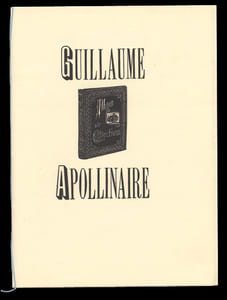
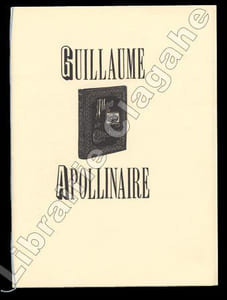
Guillaume Apollinaire.Liège, Éditions Dynamo, Pierre Aelberts éditeur, 1965 ; in-8, broché ; (14) feuillets non chiffrés et couverture blanche illustrée, le premier et dernier feuillets sont blancs.
"Cet album en souvenir d'Apollinaire est tiré à 51 exemplaires, numérotés de 1 à 51 (celui-ci N°20), le texte d'Eugène Montfort en édition originale. Imprimé en mars 1965". Reproduction de plusieurs dessins de Picasso, Bakst, Marcoussis, Cocteau, etc, de gravures anciennes, photographies, etc., imprimés en noir ou bleu sur fond blanc, jaune ou bleu ciel. Exemplaire en parfait état de ce rarissime petit album.
500,00 €
Livres
Référence : 9782845244808ARAGON Louis, COCTEAU Jean
Louis Aragon, Jean Cocteau - Entretiens sur le musée de Dresde1957, Cercle d'art, in-folio cartonné, couverture toilée, richement illustré | Etat : bon état (Ref.: G10745)
Cercle d'art
Toulon, France
40,00 €
Livres
Référence : 18302ARNAUD (Claude).
Jean Cocteau.Paris Gallimard, coll. "Biographies" 2003 1 vol. Broché fort in-8, broché, couverture illustrée, 864 pp., 32 planches hors-texte, bibliographie et index. Très bel envoi de l'auteur à Henri Clarac. En excellent état.

Eymoutiers, France
20,00 €
Livres
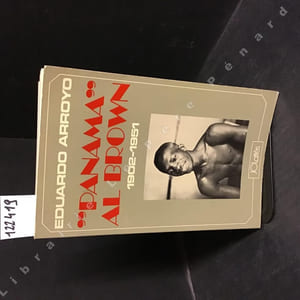
Référence : 122419ARROYO, Eduardo - Louis Nucera (préface de)
"Panama" Al Brown. 1902-1951.1982 Editions J.-C. Lattès - 1982 - In-8 broché, couverture illustrée - 251 pages - Cahier de reproductions photographique en N&B hors-texte en milieu d'ouvrage
Bon état - Légère déchirure sans manque sur la 4ème de couverture - Léger pli de lecture au dos - Menus frottements sur la couverture - Coins très légèrement emoussés
Lyon, France
17,00 €
Livres
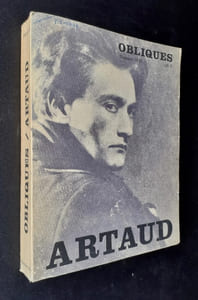
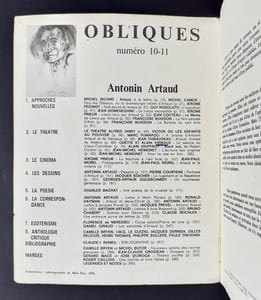
Référence : 45348ARTAUD (Antonin) - ADAMOV (Arthur) - CAMUS (Michel) - COCTEAU (Jean) - VIRMAUX (Odette et Alain) - JOUFFROY (Alain) - BRYEN (Camille) - BUTOR (Michel) - DERRIDA (Jacques) -DELEUZE (Gilles) - collectif -
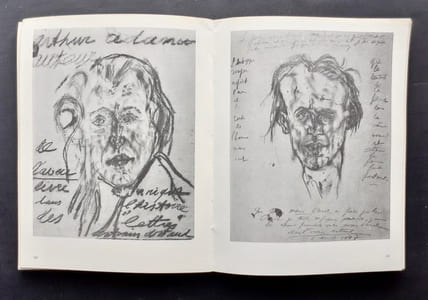
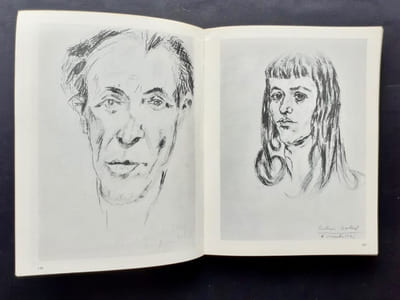
Artaud - Obliques N°10-11 -Paris : Editions Borderie ("Obliques N°10-11"), 1976 - In-8 broché sous couverture imprimée, 360 pages sur papier vergé abondamment illustrées en noir dans et hors texte - Tranches poussiéreuses sinon bon état -
Approches nouvelles, théâtre, cinéma, poésie, correspondance, ésotérisme, anthologie critique (Deleuze, Henri Thomas, Derrida, etc.), bibliographie. Tous nos livres sont visibles sur notre site : https://www.livrepoesie.com/
Chantelle, France
25,00 €
Livres
Référence : 45344ARTAUD (Antonin). ARAGON (Louis). JACOB (Max). PERET (Benjamin). TZARA (Tristan). GRIS (Juan). BRAQUE (Georges). SURVAGE (Leopold). PICASSO (Pablo). DERAIN (André). DUFY (Raoul). COCTEAU (Jean). CENDRARS (Blaise). FELS (Florent). SAUVAGE (Marcel).
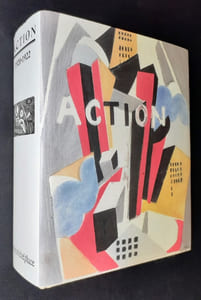
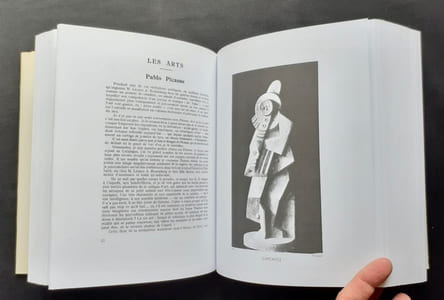
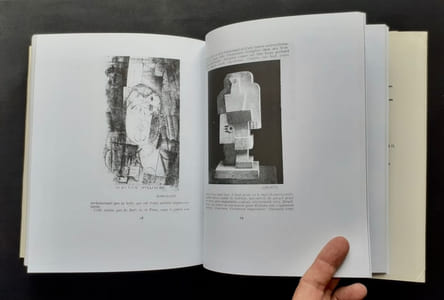
Action. "Cahiers de philosophie et d'art". Collection complète : Février 1920 - Mars-avril 1922 -Paris : Jean-Michel Place, 1999 - Un fort volume (19,5x24,7cm) toilé imprimé sous jaquette illustrée en couleurs, de 1004 pages illustrées dans et hors texte. Présentations de Walter G. Langlois et Georges Gabory. En annexes : index des noms cités, des ouvrages cités et des revues et journaux. Réimpression en fac-similé des douze numéros parus de cette revue dirigée par Florent Fels et Marcel Sauvage. Exemplaire en bon état.
Tous nos livres sont visibles sur notre site : https://www.livrepoesie.com/
Chantelle, France
110,00 €
Livres
Référence : 114228ASHFORD (Daisy).
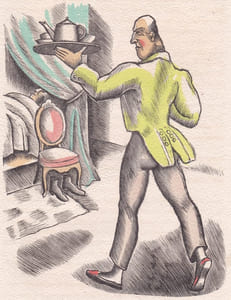
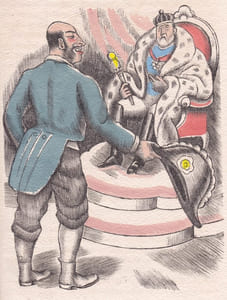
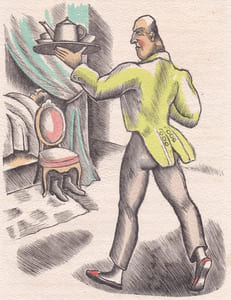
Les Jeunes Visiteurs. Traduction de M. Sachs. Préface de Jean Cocteau.Lausanne Mermod 1927 1 vol. Broché in-4, broché, couverture rempliée de papier vert couché, 94 pp. Première édition séparée, illustrée de bois gravés de Henry Bischoff, dont 12 bandeaux et 6 ravissantes compositions coloriées à la main à pleine page. "Ce livre sort de l'enfance, imbibée d'elle, comme une éponge de la mer" s'exclame Cocteau dans sa préface. Cette amusante évocation des moeurs de la haute société victorienne est en effet l'oeuvre d'une petite Anglaise de neuf ans. Ayant remporté un immense succès en Angleterre, le texte a donné lieu à une première publication en France dans la collection "Le roseau d'or" en 1926. Tirage limité à 262 exemplaires, celui-ci un des 20 hors commerce sur papier Auvergne à la cuve, tirage le plus restreint après 17 Japon. La fragile couverture de papier couché est légèrement décolorée et a un peu déteint sur les pages de gardes.
Eymoutiers, France
400,00 €
Livres
Référence : 2326ASHFORD Daisy / COCTEAU Jean / BISCHOFF Henry
LES JEUNES VISITEURS ou LE PLAN DE Mr. SALTEENA. Préface de Jean Cocteau. Bois de Henry Bischoff1927 [Lausanne], Mermod, 1927. Broché sous couverture repliée verte: 20 x 26 cm, 94-[5]p., non coupé. Traduit de l'anglais par Maurice Sachs et illustrée de 17 gravures sur bois de Bischoff: 12 en-têtes de chapitres en noir et 5 pleines pages rehaussées en couleurs. Un des 200 exemplaires sur Ancien Hollande Van Gelder (n° 214), après 6 sur vieux Japon et 25 sur Chine. Dos légèrement décoloré, sinon ouvrage en excellent état.
Outre son aspect artistique, cet ouvrage est une curiosité remarquable du fait de l'âge de son auteur : 9 ans au moment de la rédaction ! Un texte surprenant qui ne manque pas de naïve pertinence.
Lausanne, Suisse
200,00 CHF
Livres
Référence : 46568AUDIBERTI (Jacques). COCTEAU (Jean). OUALID (Philippe). ROUBINE (Jean-Jacques). JEAN (Raymond). HUMEAU (Edmond). LOVICHI (Jacques). GIROUD (Michel).
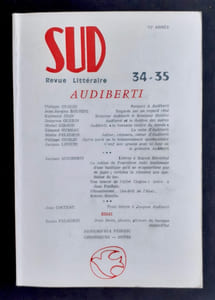
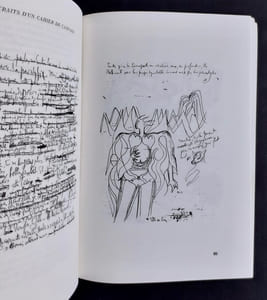
Sud. Revue trimestrielle, n°34-35, 2ème trimestre 1980. Audiberti.Marseille, directeur : Yves Broussard. 1 volume 14,5x22cm, 175 pages. Numéro consacré en partie à Audiberti. Bon état.
Fondée en 1970 par Jean Malrieu (1915-1976), la revue Sud comptera 117 numéros jusqu'en 1996. Tous nos livres sont visibles sur notre site : https://www.livrepoesie.com/
Chantelle, France
15,00 €
Livres
Référence : 25850AUMONT (Jean-Pierre) - [COCTEAU (Jean)].-
L'Empereur de Chine. Pièce en 2 parties et 4 tableaux. Préface de Jean Cocteau.P., Nagel (Collection du Théatre Contemporain), 1948, in 12 broché, 130pp. ; papier bruni avec qq. rousseurs ; couverture fanée.
Fermeture du 1er au 23 Août
Saint-Etienne, France
20,00 €
Livres
Référence : 75357AURIOL Jean-George, SARTRE Jean-Paul, COCTEAU Jean, FELLINI Federico, et alii
La revue du cinéma, anthologie. Collection : Tel, N° 208.Paris, Gallimard, 1992. 13 x 19, 481 pp., quelques illustrations en N/B, broché, bon état.
Avant-propos d'Antoine de Baecque.
Bruxelles, Belgique
20,00 €
Livres
Référence : 25324BAZIN (André). COCTEAU (Jean).
Orson Welles.Paris, Éditions Chavane, Collection Le Cinéma en Marche n° 2, 1950, in-12, broché, 64 p., couverture illustrée d'une photographie d'Orson Welles. Édition originale. Portrait d'Orson Welles en frontispice, dessinée par Jean Cocteau. Étude sur le cinéaste par Jean Cocteau et André Bazin, accompagnée de 16 pages de photographies en noir et blanc. Petite monographie précieuse à plus d’une titre et rare, surtout en bon état.
Paris, France
80,00 €
Livres
Référence : 7732[BEAUDOUIN] Waldemar George. Ambroise Vollard, Claude Aveline, Stein, Jacques Jaujard, Maurice Druon, Curzio Malaparte, Jean Cocteau, Jean Tardieu, André Cornu, Lise Deharme, Albert Sarrau, René Barotte, Clérini, Pierre du Colombier, Ménie Grégoire, Claude Faÿe, Robet Rey, Guillaume Balz, M. Seurière, Daniel Badani, A. de Saussure, G.A. Masson, Yvonne Brunhammer, Damase, J.G. Gros, M.T. Maugis, Guillaume Gillet, Pierre Imbourg, Jeanne Ramel-Cals, G.CH Recio, Claudin Chonez.
LES MARMORÉES DE JOSEPHINE BEAUDOUIN.Paris, F. de Nobele, 1965. In-8 à l'italienne, reliure toilée, reproductions, jaquette.
Édition bilingue, franco-anglaise. Édition originale. Bel envoi pleine page de Waldemar George, et, in-fine, de Joséphine Beaudoin. Déchirure sans manque à la jaquette. [7732]
45,00 €
Livres
Référence : 13044[BEAUX-ARTS] - COCTEAU (Jean).-
La Chapelle Saint Pierre Villefranche-sur-Mer.1957 Monaco, Editions du Rocher, 1957, in 4° broché, 40pp. non chiffrées, jaquette illustrée ; nombreuses illustrations.
PHOTOS sur DEMANDE. Fermeture du 1er au 23 Août
Saint-Etienne, France
30,00 €
Livres
Référence : FR19426rbBeny Roloff / Cocteau Jean / Reade Herbert / Parrot André / Vandier Jacques / Charbonneaux Jean
Merveilles de la Méditerranée Photos et légendes de Roloff Beny [Misc. Supplies] Beny Roloff / Cocteau Jean / Reade Herbert / Parrot André / Vandier Jacques / Charbonneaux JeanDédicace anonyme pour un ancien Premier Ministre français.
Merci de nous contacter à l'avance si vous souhaitez consulter une référence dans notre boutique à Authon-du-Perche.
Authon-du-perche, France
30,00 €
Livres
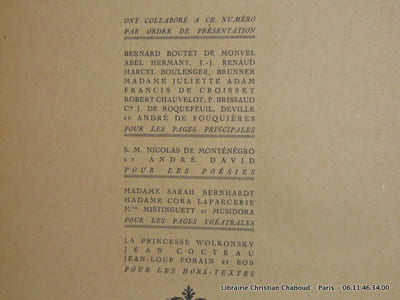
Référence : 28850Bernard Boutet de Monvel, Abel Hermant, J.-J. Renaud, Marcel Boulenger, Brunner, Mme Juliette Adam, Francis de Croisset, Deville, André de Fouquières, S.M. Nicolas de Monténégro, André David, Sarah Bernhardt, Cora Laparcerie, Mme Mistinguett, Musidora, Princesse Wolkonsky, Jean Cocteau, Jean-Loup Forain, Bob
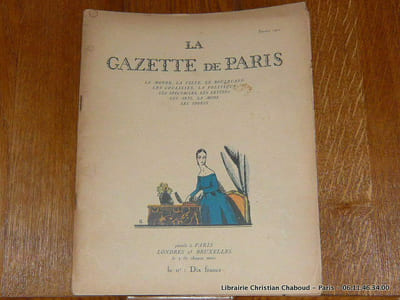
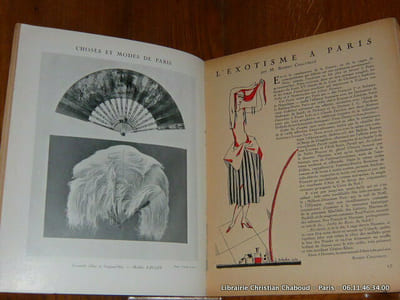
La Gazette de Paris. N°3 Février 1921. Le Monde, La Ville, Le Boulevard, Les Coulisses, La Politique, Les Spectacles, Les Lettres, Les Arts, La Mode , Les Sports.Paris, 220x270mm, agrafé, 32 pages. Couverture légèrement défraîchie, principalement la 4ème de couverture. Complet du portrait de Paul Iribe par Jean Cocteau en feuille volante.
Bruxelles, Belgique
110,00 €
Catalogue thématique
- Boileau Despréaux Nicolas
- Boissonnas Edith
- Bonnamy Jean-Pierre
- Bonnefoy Yves
- Borne Alain
- Boschère Jean de
- Bosquet Alain
- Bosschère Jean de
- Bouchet André du
- Bouchet G.
- Bouchor Maurice
- Bouilhet Louis
- Bouloc Denys Paul
- Bounoure Vincent
- Bourgeois Pierre
- Bourgoin Alphonse
- Bousquet Joë
- Boutang Pierre
- Brautigan Richard
- Brimont Renée de
- Brunel Henri Victor
- Bukowski Charles
- Burgart Jean-Pierre
- Cadou René Guy
- Caërdal
- Calemard de La Fayette Charles
- Cardonnel Louis Le
- Carducci
- Carême Maurice
- Castel René Richard
- Cayrol Jean
- Cazalis Anne-Marie
- Cazals Alban
- Cazelles René
- Cernuda Luis
- Césaire Aimé
- Chambelland Guy
- Chambrier Alice de
- Charasson Henriette
- Charpier Jacques
- Chaulieu Abbé de
- Chaulot Paul
- Chenivesse Raoul
- Chevalley Étienne
- Chevallier Simone
- Chevrier Maurice
- Cholet De Jetphort
- Clancier Georges-Emmanuel
- Claudel Paul
- Cobbing Bob
- Colletet Guillaume
- Collet Louise
- Colum Padraic
- Coppée François
- Courtot Claude
- Creeley Robert
- Crémazie Octave
- Cros Guy-Charles
- Crouzet P.
- Dadelsen Jean Paul de
- Daive Jean
- Darmangeat Pierre
- Darval Jacques
- Decaunes Luc
- Delavigne Casimir
- Della Faille Pierre
- Delorme Hugues
- Delorme Maurice
- Deluy Henri
- Denis Frédéric
- Denis Philippe
- Depierris Jean-Louis
- Dermée Paul
- des Essarts Alfred
- Deshoulières
- Desnos
- Deubel Léon
- Devillers Charles
- Dhainaut Pierre
- Dion-Lévesque
- Divoire Fernand
- Dobzynski Charles
- Donguy Jacques
- Donne John
- Dorchain Auguste
- Dorian Tola
- Doryan Mirèio
- Dotremont Christian
- Doysie Abel
- Drouet Minou
- Drouot Paul
- Dubacq Jean
- Dubost Louis
- Dupin Jacques
- Duprey Jean-Pierre
- Durocher Bruno
- Eliot T S
- Éluard Paul
- Émié Louis