Livres
Référence : 111053COLLECTIF - Préface de Joseph Jobé
Au gré des vents. Histoire illustrée des ballons libres.1971 Editions Edita - 1971 - In-4, cartonnage toilé orange sous jaquette illustrée en couleurs de l'éditeur - 197 p. - Très nombreuses illustrations in et hors-texte en N&B, et nombreuses illustrations contrecollées en couleurs
Bon état - Infime pli et frottements sur la jaquette - Sous couverture plastifiée transparente
Lyon, France
28,00 €
Livres
Référence : 769CORNILLE, Didier
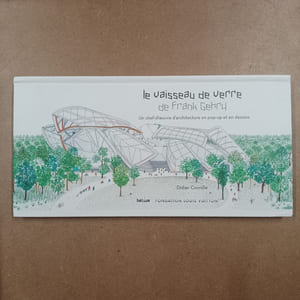
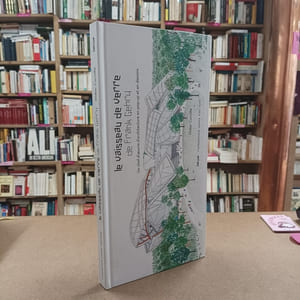
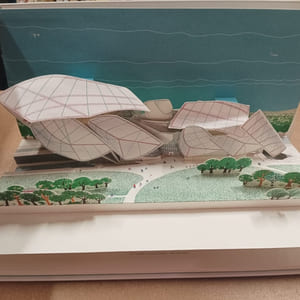
Le vaisseau de verre de Frank Gehry2014 - cartonné - Editions Hélium / Actes Sud - Fondation Louis Vuitton - 2014 - In-4 format à l'italienne (18,5 x 36,5 cm) cartonnage illustré - 24 pages - Pop-up architectural en début d'ouvrage - Superbe livre avec des textes et illustrations de Didier Cornille - Ingénierie papier de Bernard Duisit - ISBN : 9782330034955 - Ouvrage sous titré : "Un chef-d'oeuvre de l'architecture en pop-up et en dessins"
Bon état
Lyon, France
15,00 €
Livres
Référence : 5375Duclaux, Jacques :
Homme (L') devant l’univers.Paris, Flammarion (Bibliothèque de Philosophie scientifique), 1949 ; in-8, broché ; 292 pp., (1) f. de table ; couverture rose imprimée, illustrée en blanc.
Edition originale. Exemplaire en bon état.
25,00 €
Livres
Référence : 100149668Edgar Rice Burroughs
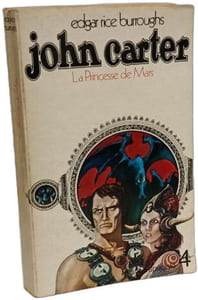
John Carter : La Princesse de MarsÉdition Spéciale 1971 in12. 1971. Broché. Le capitaine John Carter vétéran de la guerre de Sécession est mystérieusement projeté sur la planète Mars (Barsoom). Il y découvre un monde merveilleux mais dangereux se fait prisonnier des hommes verts de Thark et tombe amoureux de Dejah Thoris princesse d'Hélium
Etat correct
10,00 €
Livres
Référence : 44231"JANSSEN, PIERRE JULES CÉSAR - THE DISCOVERY OF HELIUM IN THE SUN.
Éclipse de Soleil du 18 Aout 1868. Rapport adressé par M. Janssen au Maréchal de France Président du Bureau des Longitude.Paris, G. Masson, 1878. 8vo. Contemp. hcalf, raised bands, gilt spine. Light wear along edges. Small stamps on verso of titlepage. In: ""Annales de Chimie et de Physique"", 4e Series - Tome 15. 512 pp. a. 3 folded engraved plates. (The entire volume offered). Janssen's memoir: pp. 414-426.
First appearance of this milestone paper in chemistry, physics and astronomy, announcing the discovery of the helium lines in the spectrum of the sun. It was Lockyer in the same year that named it 'helium' for Helios, the Greek God of the Sun. Helium was not discovered on the earth before 1895 by William Ramsay, and it was Crookes who established its identity with the helium Janssen and Lockyer observed in the spectrum of the sun.""He Janssen) met immortality by travelling to India in 1868 to study the total eclipse. It was then that he observed the helium line and forwarded the spectral data to ockyer. He also noted the size of the solar prominences. The day after the eclipse he attempted to take their spectra again and succeeded despite the absence of the obscuring moon. he then announced jubilantly that it was the day after the eclipse that was the real eclipse day for him. Lockyer also reported this method of studying prominences without an eclipse....Like Lockyer he lived to see his observation of the helium line vindicated by Ramsay's discovery of that element on earth.""(Asimov).""This (the discovery of helium lines in the sun by Lockyer) was announced on the same day by the French astronomer Janssen, who was in India observing a total eclipse. As a result, the French government some ten years later struck a medallion showing the heads of both scientists.By that time, the two men had made a much more dramatic discovery at the same time, this time in cooperation. Janssen, studying the spectrum ofthe sun during the eclipse, had noted a fine line he did not recognize. he send a report on this to Lockyer, an acknowledges expert on solar spectra. Lockyer compared the reported position of the line with lines of known elements, concluding that it must belong to a yeat unknown element, possibly not even existing on the earth. He named the element, from the Greek word for the sun.""(Asimov).Parkinson ""Breakthroughs"" 1868 A. - The volume contains other notable papers by Dumas, Berthelot et al.

Copenhagen, Danemark
7 500,00 DKK
Livres
Référence : 59086"JANSSEN, PIERRE JULES. - DISCOVERY OF THE FIRST ALIAN ELEMENT, HELIUM.
Observations spectrales prises pendent l'éclipse du 18 août 1868, et methode d'observation des protubérances des éclipses... Calcutta, 3 octobre 1868.(Paris, Gauthier-Villars), 1869. 4to. In: ""Comptes Rendus Hebdomadaires des Séances de L'Academie des Sciences"", Tome 68, No 7. Pp. (349-) 408. (Entire issue offered). Janssen's paper pp. 367-376.
First printing of the paper in which Janssen announced the discovery of a new element. On August 18, 1868, Janssen managed to do just that. He became the first person to observe helium, an element never before seen on Earth, in the solar spectrum. At the time, though, Janssen didn’t know what he’d seen""just that it was something new""""Helium, the second most abundant element in the universe, was discovered on the sun before it was found on the earth. Pierre-Jules-César Janssen, a French astronomer, noticed a yellow line in the sun's spectrum while studying a total solar eclipse in 1868. Sir Norman Lockyer, an English astronomer, realized that this line, with a wavelength of 587.49 nanometers, could not be produced by any element known at the time. It was hypothesized that a new element on the sun was responsible for this mysterious yellow emission. This unknown element was named helium by Lockyer.""
Copenhagen, Danemark
3 500,00 DKK
Livres
Référence : 42423"LOCKYER, JOSEPH NORMAN - THE DISCOVERY OF HELIUM.
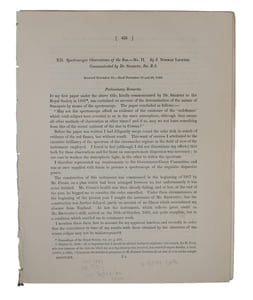
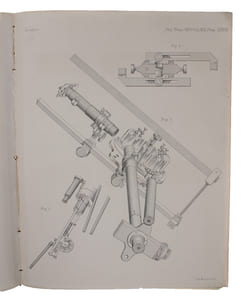
Spectroscopic Observations of the Sun.- No. II. Received November 19,- Read November 19 and 26, 1868. (With additional notes Nov. 26, April 9, 1869, Oct. 10, 1869).(London, Taylor and Sons, 1870). 4to. No wrappers as extracted from ""Philosophical Transactions"" 1869, Vol. 159 - Part I. Pp. 425-444 and 2 lithographed plates (1 with the spectrum of helium, 1 with his spectroscope (not requiring eclipses to function)). Clean and fine.
First appearance of this milestone paper in chemistry, physics and astronomy, announcing the discovery of helium in the sun and naming it 'helium' for Helios, the Greek God of the Sun. In the same paper he demonstrates his invention of the spectroscope by which the prominences of the sun could be observed and studied without an eclipse by leading the light from the very edge of the sun through a prism. - Helium was not discovered on the earth before 1895 by William Ramsay, and it was Crookes who established its identity with the helium Lockyer observed in the spectrum of the sun.""This (the last discovery) was announced on the same day by the French astronomer Janssen, who was in India observing a total eclipse. As a result, the French government some ten years later struck a medallion showing the heads of both scientists.By that time, the two men had made a much more dramatic discovery at the same time, this time in cooperation. Janssen, studying the spectrum ofthe sun during the eclipse, had noted a fine line he did not recognize. he send a report on this to Lockyer, an acknowledges expert on solar spectra. Lockyer compared the reported position of the line with lines of known elements, concluding that it must belong to a yeat unknown element, possibly not even existing on the earth. He named the element, from the Greek word for the sun.""(Asimov).
Copenhagen, Danemark
9 500,00 DKK
Livres
Référence : 49284"RAMSAY, WILLIAM & PER THEODOR CLEVE. - THE INDEPENDENTLY DISCOVERY OF HELIUM ON EARTH
On a Gas showing the Spectrum of Helium, the reputed cause of D3, one of the Lines in the Coronal Spectrum. preliminary Note. (Received March 26, 1895). (+) Helium, a Gaseous Constituent of certain Minerals. Part I. And (P.E. CLEVE:) Sur la présence d...London, arrison and Sons, 1895. - (Paris, Gauthier-Villars), 1895. 8vo. and 4to. Later full cloth, gilt lettering to spine (Ramsay) and without wrappers (Cleve). In ""Proceedings of the Royal Society"" (Ramsay), Vol. 58. (Entire vol. offered). And in ""Comptes Rendus Hebdomadaires des Séances de L'Academie des Sciences"" (Cleve), Tome 120, No 15. Pp. (797-) 850. (Entire issue offered). Ramsay's papers: pp. 65-67 and pp. 81-89. - Cleve's paper: p. 834. Stamps tp edges and a few corners a bit bumped on vol. 58, otherwise clean and fine.
First printing of both papers in which Ramsay and Cleve - independently - announced their discovery of Helium on the Earth. Although Ramsay announced the discovery of Helium before Cleve had completed his research, the Swedish chemist was independent discoverer of the element.Helium was discovered in the sun already in 1868 by Jules Janssen and independently by Lockyer the same year. Janssen discovered helium in the sun when he observed a total eclipse in India by studying the spectra of the suns chromosphere and Lockyer, also by spectroscopy, found that the new line in the spectrum did not belong to any element then known and he named it Helium for the sun.In the same volume as Ramsays paper there are 5 papers by NORMAN LOCKYER dealing with the discovery of Helium on the earth, examining Ramsay's and Cleve's findings.Parkinson ""Breakthroughs"", 1895.
Copenhagen, Danemark
4 500,00 DKK
Livres
Référence : 20092VAN DEN BERG, G.J.;
DE MERKWAARDIGE EIGENSCHAPPEN VAN HELIUM, Jaargang XII N? 8.Brussel, Paleis der Academien, 1950 oorspronkelijk , papieromslag, 180 x 260mm., 51pp.
Mededelingen van de Koninklijke Vlaamse Academie voor Wetenschappen, Letteren en Schone Kunsten van Belgie. Klasse der Wetenschappen. Jaargang XII N? 8. In goede staat.

Antwerpen, Belgique
10,00 €
Livres
Référence : 20091VAN ITTERBEEK, A.;
OVER DE NIEUWE INSTALLATIE VOOR VLOEIBAAR HELIUM IN HET NATUURKUNDIG LABORATORIUM DER LEUVENSE UNIVERSITEIT,Brussel, Paleis der Academien, 1943 oorspronkelijk papieromslag, 180 x 260mm., 13pp.
Mededelingen van de Koninklijke Vlaamse Academie voor Wetenschappen, Letteren en Schone Kunsten van Belgie. Klasse der Wetenschappen. Jaargang V N? 10. In goede staat.
Antwerpen, Belgique
10,00 €
Livres
Référence : 20093VAN ITTERBEEK, A.; DE GREVE, L. and VAN PAEMEL, O.;
SMALL HELIUM LIQUEFIER OF THE EXPANSION TYPE/ MEASUREMENTS ON THE HELIUM CONTENT OF MONAZITE OF BELGIAN CONGO,Brussel, Paleis der Academien, 1950 Gebrocheerd, papieromslag, 180 x 260mm., 9pp.
Mededelingen van de Koninklijke Vlaamse Academie voor Wetenschappen, Letteren en Schone Kunsten van Belgie. Klasse der Wetenschappen. Jaargang XII N? 10. In goede staat.
Antwerpen, Belgique
10,00 €
Catalogue thématique
- Bader Alfred
- Bary Paul
- Berthelot Marcelin
- Boutaric Augustin
- Chaplet A.
- Chimie Organique
- Colson Albert
- Deherain P. P.
- Éthanol
- Fabre René
- Fersman A.
- Fourcroy Antoine-François
- Gattefossé René-Maurice
- Gay-Lussac
- Gaz
- Géochimie
- Georges Claude
- Hahn Otto
- Huile
- Hydrogène
- Joliot-Curie Irène
- Kahane Ernest
- Lamirand J.
- Lavoisier Antoine
- Le Chatelier Henry
- Lemonnier Guy
- Locquin R.
- Mesplède J.
- Metzger Hélène
- Morphine
- Naquet Alfred
- Néon
- Parfums
- Pauling Linus
- Prigogine Ilya
- Sandoz
- Schueller Eugène
- Soufre
- Teintures
- Wurtz A.